
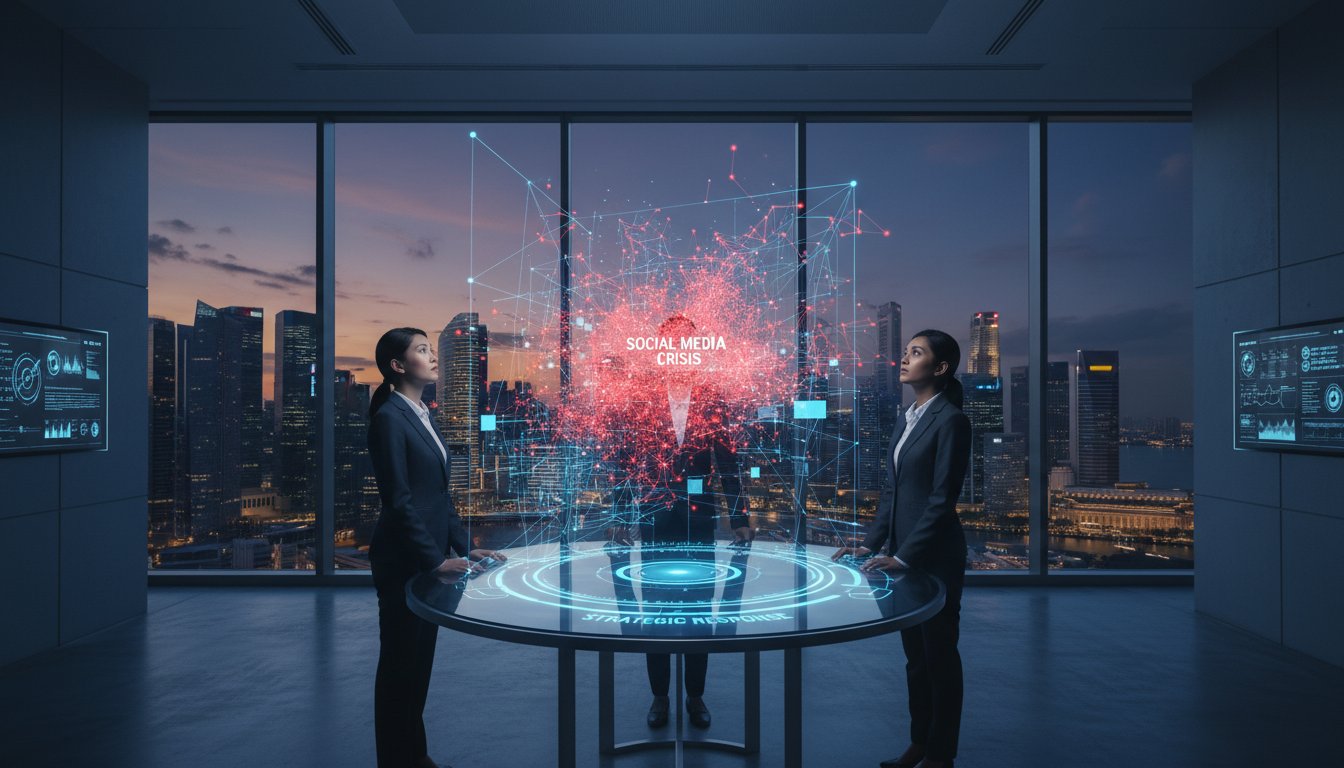
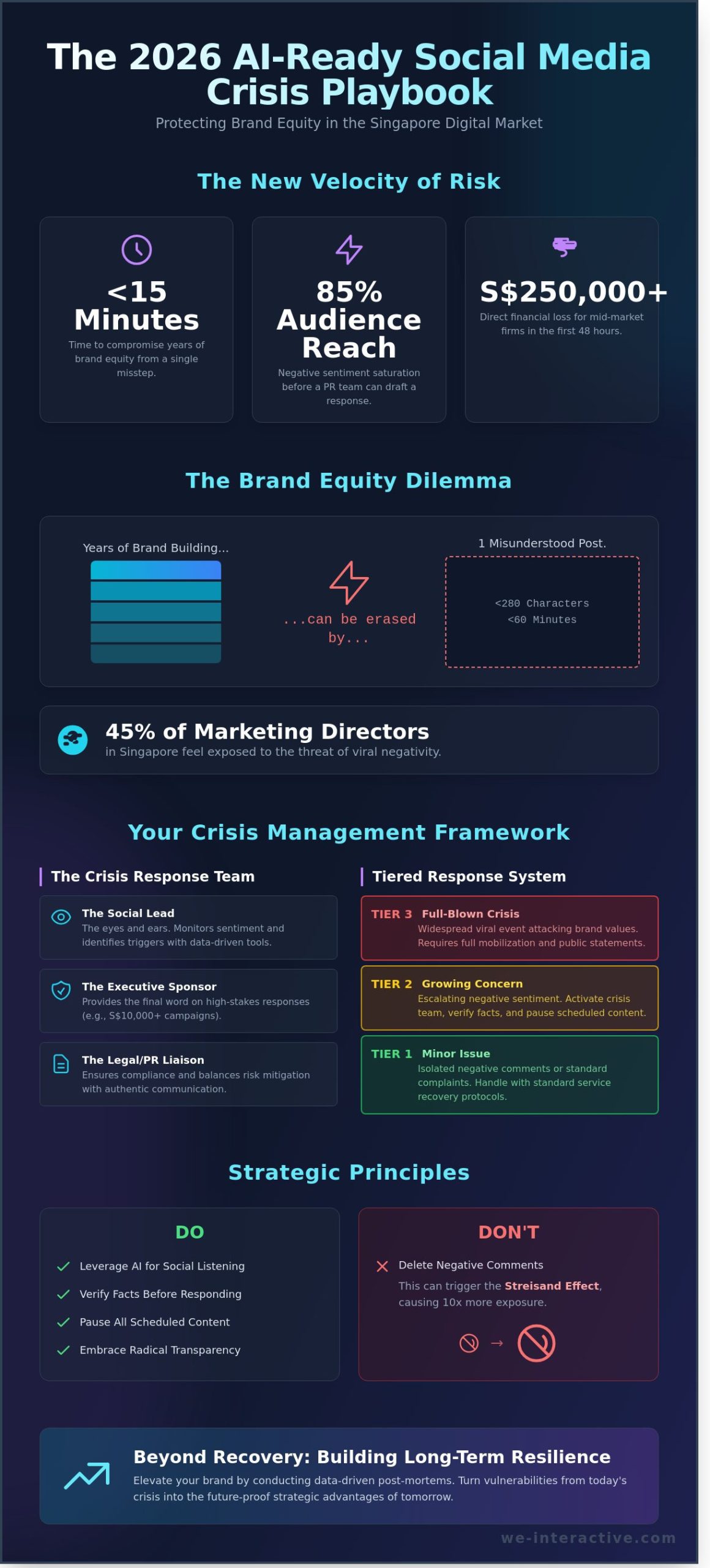
In the Singapore digital market, it takes exactly 280 characters and less than 60 minutes for a misunderstood post to erase years of brand equity. You already know that social media moves faster than a traditional internal approval hierarchy. This reality leaves 45% of local marketing directors feeling exposed to viral negativity according to recent 2024 industry surveys. It’s exhausting to distinguish between a harmless troll and a genuine reputation threat while your team waits for a green light that arrives far too late.
WE believe that preparation is the ultimate form of innovation. This guide teaches you how to construct a robust, AI-ready social media crisis management plan that protects your brand reputation and maintains customer trust. By the end of this article, you’ll have a clear, actionable document designed to unlock faster response times and empower your team with confidence. We’re moving from clicks to conversations, ensuring your brand stays resilient when the pressure rises. We’ll preview the specific protocols needed to turn a potential S$100,000 PR disaster into a masterclass in brand integrity.
Key Takeaways
- Navigate the high-velocity 2026 digital landscape where algorithmic shifts demand a response in minutes to protect your brand equity and ROI.
- Construct a robust social media crisis management plan featuring a tiered response system that empowers your team to act with precision and authority.
- Leverage AI-powered social listening to detect subtle sentiment shifts, turning real-time data into defensive insights for the Singapore market.
- Master the art of internal mobilization by verifying facts and pausing scheduled content to ensure your brand remains in full control of the narrative.
- Elevate your brand resilience by conducting data-driven post-mortems that turn vulnerabilities into future-proof strategic advantages.
Understanding the Social Media Crisis Landscape in 2026
In 2026, the speed of digital discourse has reached a point where a single misstep can compromise years of brand building in under fifteen minutes. A true social media crisis isn’t just a handful of negative comments. It’s a systemic event that threatens your long-term brand equity and measurable ROI. When WE Interactive partners with brands, we emphasize that a robust social media crisis management plan is no longer a luxury; it’s a foundational pillar of business continuity. We help you turn your digital presence into a powerful force that withstands the pressures of a hyper-connected world.
The 2026 landscape is defined by hyper-accelerated algorithmic shifts. Modern discovery engines prioritize high-velocity engagement, meaning negative sentiment can reach 85% of your total audience before your PR team has even drafted a statement. You must distinguish between a standard customer complaint, which requires a simple service recovery, and a systemic brand crisis that attacks your core values. Understanding these crisis management principles allows you to categorize threats accurately and deploy the right resources. From clicks to conversations, your response dictates whether you lose a customer or gain a lifelong advocate.
Silence carries a heavy price tag in the Singapore market. Data from 2025 consumer behavior reports shows that brands failing to respond within sixty minutes during a viral event see an average 12% drop in quarterly revenue. In a competitive hub like Singapore, where consumer trust is paramount, a delayed response can lead to a direct loss of S$250,000 or more for mid-market enterprises during the initial 48-hour window. Growing Together means protecting your financial health through proactive preparation.
The Rise of AI-Driven Brand Risks
Deepfakes and AI-generated misinformation have transformed the risk profile for modern businesses. Synthetic outrage, often fueled by sophisticated bot networks across Southeast Asian markets, can mimic a genuine public backlash. Identifying these patterns requires a blend of advanced sentiment analysis and human intuition. At WE Interactive, we help you elevate your social strategy by integrating AI-detection tools that separate genuine customer dissatisfaction from coordinated digital attacks. We balance the art of social media with the science of marketing automation to keep your reputation secure.
Why “Deleting” is Not a Strategy
Attempting to scrub negative content often triggers the Streisand Effect, where the act of hiding a mistake ensures it receives ten times more exposure. Transparency acts as your most potent defensive mechanism in the digital age. WE believe in building a culture of radical honesty that empowers your team to address issues head-on. Brand Resilience is the ability to convert a crisis into a conversation.
The Essential Components of Your Crisis Management Plan
A robust social media crisis management plan isn’t just a document. It’s a living framework that empowers your brand to act with precision when the heat rises. In Singapore, where 89.5% of the population is active on social platforms as of 2024, a single viral misstep can impact brand equity within hours. You need a structure that balances the art of human empathy with the science of rapid response. WE believe that agility is your greatest asset. By establishing a predefined chain of command, you bypass corporate red tape and empower your team to protect your brand reputation in real-time.
The Crisis Response Team: Roles and Responsibilities
Success depends on a cross-functional team with clear decision-making power. This group should meet quarterly to review protocols and run simulations.
- The Social Lead: These are the eyes and ears on the ground. They monitor sentiment shifts using data-driven tools and identify potential triggers before they escalate.
- The Executive Sponsor: This leader provides the final word on high-stakes apologies or S$10,000+ recovery campaigns. Their presence ensures the response aligns with long-term business goals.
- The Legal/PR Liaison: They ensure compliance with local regulations like the PDPC without losing the human touch. This role is vital for balancing risk mitigation with authentic communication.
Tiering Your Response Strategy
Not every negative comment is a catastrophe. Categorizing incidents allows you to allocate resources effectively and avoid overreacting to minor issues. Integrating social media crisis communication tips into these tiers helps maintain trust while providing the necessary technical details to stakeholders.
- Tier 1 (Individual): These are isolated negative comments or customer service queries. Handle these with empathy and direct resolution. This is where your social media marketing team shines by turning a complaint into a positive brand experience.
- Tier 2 (Emerging): This involves a cluster of similar complaints or a trending hashtag. It requires active monitoring and perhaps a brief, public acknowledgement to prevent further spread.
- Tier 3 (Critical): A full-scale crisis involving mainstream media or legal implications. This level triggers a multi-channel response, often led by the CEO, to address the core issue head-on.
Your plan must include pre-approved messaging templates for these scenarios. These aren’t scripts to follow blindly. They’re strategic foundations that ensure your brand voice remains consistent under pressure. By preparing these in advance, you unlock the ability to respond within the “golden hour,” the first 60 minutes after a crisis breaks. This proactive approach is how WE help brands turn potential disasters into opportunities for growth and deeper customer loyalty.
Strategic Monitoring: Turning Data into Defensive Insights
Monitoring is the backbone of any robust social media crisis management plan. By 2026, simply tracking brand mentions has become obsolete. You need AI-powered social listening that identifies anomalies before they scale into public scandals. This isn’t just about watching the news; it’s about defensive intelligence that protects your bottom line.
Traditional alerts usually trigger based on keyword volume. If 1,000 people mention your brand, you get a notification. But volume is a lagging indicator. Smart Alerts now focus on sentiment shifts. A 12% drop in positive sentiment within a single hour is a red flag, even if the total number of mentions remains low. This early detection allows you to address a spark before it becomes a forest fire.
In Singapore and Indonesia, over 68% of brand discussions happen within “Dark Social” channels like WhatsApp and Telegram groups. These closed ecosystems are often where rumors ignite. WE help brands monitor public community hubs and regional forums to catch these whispers early. Integrating this sentiment data with your CRM is the next step in sophisticated defense. If a customer with a lifetime value of S$25,000 expresses frustration online, your system should flag them for immediate, high-priority resolution. This turns a potential PR disaster into a personalized recovery mission that builds long-term loyalty.
The Science of Sentiment Analysis
Data helps you distinguish between a localized glitch and a global catastrophe. We analyze the “Velocity of Negativity,” which measures how fast a story spreads across different time zones and platforms. By utilizing CRM & Customer Marketing, you can track how these sentiment dips correlate with actual churn rates. This scientific approach ensures your social media crisis management plan is backed by hard numbers rather than gut feelings.
Setting Up a 24/7 Command Centre
Real-time monitoring is non-negotiable for brands entering the China market. Platforms like Weibo and Douyin move with a speed that can overwhelm unprepared teams. A delay of just three hours can lead to a nationwide boycott. Our China Market Entry Services provide the regional context and linguistic nuance needed to interpret these shifts correctly. We use automated platforms that predict “early warning” patterns, giving your leadership team the breathing room to make informed, strategic decisions. Data is your shield; use it to elevate your brand’s resilience.
How to Execute Your Response: A Step-by-Step Guide
Execution is where strategy meets reality. When a situation goes viral in Singapore, your social media crisis management plan must move from paper to practice instantly. WE believe that precision in these moments defines your brand’s future resilience. From clicks to conversations, every response must be calculated and calm.
- Step 1: Immediate Assessment. Verify every detail. In January 2024, a local SG retailer faced a S$15,000 loss in brand equity by reacting to a fabricated complaint before checking internal logs. Verify facts before speaking.
- Step 2: Internal Mobilisation. Activate your core crisis team. Pause all scheduled marketing posts across every channel to avoid appearing insensitive.
- Step 3: The First Response. Silence is often perceived as guilt. Acknowledge the issue within 60 minutes to show you’re present and accountable.
- Step 4: Strategic Resolution. Move beyond apologies. Provide a clear solution or a transparent timeline for a fix.
- Step 5: Monitoring and Adjustment. Use real-time data to refine your messaging. If the sentiment shifts, your tone must shift too.
The “Golden Hour” of Crisis Communication
The first 60 minutes determine the trajectory of any digital fire. This window is your opportunity to set the tone. Drafting a “holding statement” is essential; it buys time by stating WE are investigating the matter and will provide an update shortly. This prevents the appearance of being evasive while you gather facts. The #1 mistake brands make is responding with defensiveness. Empathy is what de-escalates anger. People want to feel heard, not argued with, so keep the focus on the human impact rather than corporate policy.
Content Protocols: What to Share and When to Pause
The “Kill Switch” is your first line of defense. You must instantly halt all automated marketing campaigns. A pre-scheduled “Buy Now” post appearing during a crisis can damage your ROI for months. Platform choice is equally strategic. Use LinkedIn for B2B professional updates and TikTok or Instagram for B2C brands requiring a human face. Contextual Awareness is the ability to interpret the emotional climate of a digital space and adjust brand behavior to align with public sentiment. It’s the most important trait for any modern crisis manager. WE help brands turn these digital challenges into opportunities for growth. Your social media crisis management plan should be a living document that evolves with every interaction.
Beyond Recovery: Building Long-Term Brand Resilience
The true measure of a social media crisis management plan isn’t just how it stops the bleeding, but how it strengthens the brand for the future. Once the immediate threat subsides, WE initiate a rigorous post-mortem analysis. We don’t rely on gut feelings. We look at the hard data. Analysis from 2025 Singapore market trends shows that brands conducting deep-dive audits post-crisis see a 35% higher retention rate in customer loyalty compared to those that simply move on. We examine response latency, sentiment shifts, and the specific touchpoints where the narrative shifted. This data tells us exactly where our vulnerabilities lie.
Refining your strategy is an iterative process. We update the plan based on real-world performance and specific audience reactions observed during the event. If your community responded better to video apologies than written statements, we pivot. This proactive evolution ensures your brand doesn’t just recover; it evolves. We focus on transforming your harshest critics into your strongest advocates. By engaging transparently after the heat has died down, you demonstrate a level of accountability that builds deep, lasting trust. WE Interactive stands as your strategic partner, ensuring your brand protection is as dynamic as the digital landscape itself.
The Role of a Strategic Partner in Prevention
Prevention is always more cost-effective than a cure. Regular audits and sentiment monitoring prevent small customer complaints from escalating into viral disasters. Through proactive Social Media Marketing, we help you build a “trust bank” with your audience. When your brand consistently delivers value and engages authentically, you earn a layer of protection. Our collaborative workshops keep your internal teams sharp, ensuring everyone knows their role when the pressure rises. We’re not just a service provider; we’re an extension of your team, growing together to safeguard your reputation.
Optimising for Future Growth
Crisis insights provide a rare, unfiltered look at customer pain points. We use these lessons to improve product development and refine customer service protocols. To understand the financial impact, we utilize Performance Marketing metrics to measure the ROI of your crisis response. For example, if a strategic intervention prevents a projected S$150,000 loss in brand equity for a Singapore-based retailer, the value of a prepared social media crisis management plan is undeniable. We turn these hard-won lessons into a competitive advantage, empowering your brand to enter new markets with confidence and a proven resilience framework.
Master Your Digital Resilience Today
The digital landscape of 2026 demands immediate action and precise execution. You’ve seen how a proactive social media crisis management plan serves as your brand’s strongest defense by turning real-time monitoring into actionable insights. By following a structured response guide and focusing on long-term resilience, you ensure your brand doesn’t just survive a disruption but emerges stronger. Success in Singapore’s competitive market requires this sophisticated balance of data-driven precision and creative agility.
WE Interactive has been shaping digital success since 2009. We’ve spent over 15 years pushing boundaries as a strategic partner to global icons like Starbucks and Singapore Airlines. Our approach blends the art of social media with the science of performance to deliver measurable growth. We’ve executed over 700 campaigns, proving that the right strategy turns clicks into conversations and impressions into lasting trust.
Elevate your brand protection with WE Interactive’s strategic social media services.
It’s time to stop reacting and start leading. Let’s build a future where your brand thrives through every challenge. We’re ready to grow together.
Frequently Asked Questions
What is the first thing a brand should do when a social media crisis hits?
Your first move is to pause all scheduled content and issue a holding statement within 30 minutes of detection. This immediate action prevents insensitive automated posts from appearing while your team gathers facts. WE Interactive recommends a brief acknowledgement that signals your brand is active and investigating. This rapid response can prevent the 15% surge in negative sentiment typically seen when brands remain silent during the first hour of an incident.
How do you tell the difference between a real crisis and a few angry trolls?
You identify a true crisis by monitoring the velocity of mentions and the influence of those speaking. A real crisis involves a 25% increase in negative sentiment over a two hour window or participation from verified accounts and news outlets. Trolls usually operate in isolation without gaining traction among your core customer base. We use data-driven sentiment analysis to distinguish between harmless noise and threats that require you to activate your full response protocol.
Should we delete negative comments during a crisis to stop them from spreading?
No, you shouldn’t delete negative comments unless they violate specific community guidelines like hate speech or doxxing. Transparency is vital for Singaporean consumers; in fact, 82% of local users lose trust in brands that hide criticism. Instead of erasing the trail, address the concerns publicly to show you’re listening. This approach turns a potential disaster into an opportunity to showcase your commitment to service and accountability.
How long does it take to create a social media crisis management plan?
A comprehensive social media crisis management plan typically takes 4 to 6 weeks to develop from the initial audit to the final simulation. This duration allows for deep vulnerability mapping and alignment across your internal stakeholders. Most Singaporean medium-sized enterprises invest between S$5,000 and S$15,000 to build this strategic foundation. It’s a necessary investment to protect your ROI and ensure your digital presence remains a powerful force during turbulent times.
What roles are essential in a crisis response team for a medium-sized business?
Your team needs four core roles: a Crisis Lead, a Social Media Monitor, a Legal Advisor, and a Senior Decision Maker. The Crisis Lead coordinates the workflow while the Monitor tracks sentiment shifts in real time. Your Legal Advisor ensures compliance with Singapore’s POFMA and data privacy laws. This collaborative structure empowers your brand to move from clicks to conversations with confidence, ensuring every response is both legally sound and creatively insightful.
Can AI help in managing a social media crisis, or does it make it worse?
AI accelerates threat detection by 40% through automated sentiment alerts and anomaly tracking. It’s a powerful tool for your social media crisis management plan because it identifies patterns faster than any human team. However, AI shouldn’t handle the actual communication. You need human empathy to navigate the nuances of a brand apology. We believe in balancing the science of AI monitoring with the art of human-centric storytelling to resolve conflicts effectively.
How often should we update our social media crisis management plan?
You must review and update your strategy every 6 months to account for platform algorithm changes and new digital trends. The digital landscape moves fast, and a plan from 2024 won’t address the specific risks of 2026. Conduct a full simulation drill every 180 days to ensure your team’s skills stay sharp. Regular updates allow you to optimize your response tactics and incorporate fresh insights from recent industry case studies.
Is a public apology always necessary for every mistake on social media?
No, a public apology is only necessary when the mistake impacts your customers’ trust or safety. We categorize incidents into three levels of severity to determine the right response. Minor typos or lighthearted errors often only require a witty correction or a direct reply to affected users. If the issue involves data breaches or ethical lapses, a formal statement is mandatory to begin the process of growing together and rebuilding your brand’s reputation.